Versions
FLUKA:4-5.0
Flair:3.4-5.1
Description
Dear FLUKA experts,
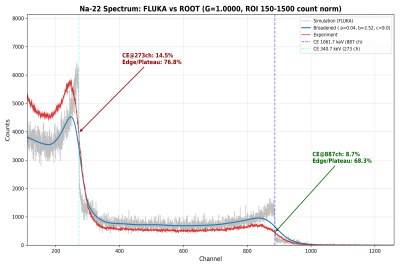
I am simulating gamma irradiation of an EJ315 liquid scintillator. For the Na22 source, positron-electron annihilation occurs near the 511 keV Compton edge, with two electrons involved in this process. I suspect this effect may explain why my simulated spectrum shows lower counts compared to experimental measurements.
I would like to ask whether the β-decay of Na22 can be enabled via the raddecay card in FLUKA.
Attached please find my FLUKA .inp input file, together with a normalized comparison plot between simulated and measured spectra.
Thank you very much for your time and advice.
Best regards,
Yiteng
Input files
EJ_315.inp (2.3 KB)
Dear Yiteng,
You were very close to the solution. First of all, the simulation is set up correctly to simulate the decay of Na22.
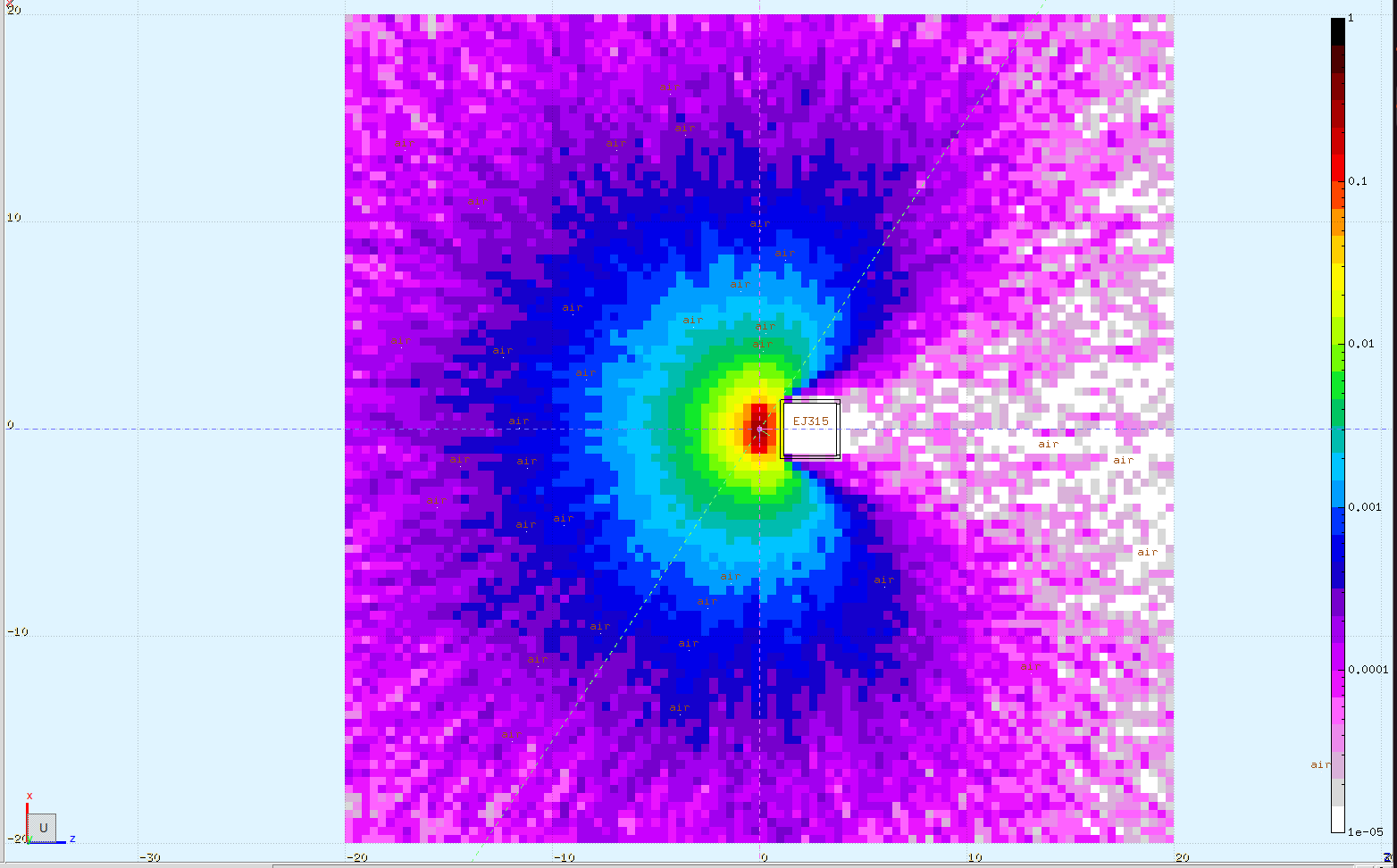
However, the positrons created by the β+ - decay require a medium to be converted into the 511-keV photon pairs that are missing in your detector. Since you did not implement a realistic model of the source (probably some sodium compound + some plastic metal case), the positrons are released into air. At energies of dozens to a few hundred keV as in Na22 decay, positrons have a range of many centimeters in air (see https://physics.nist.gov/PhysRefData/Star/Text/ESTAR.html, for example), which means that they will annihilate very far from your source volume, while all 1274-keV gamma rays from the de-excitation of 22Ne are originating strictly from the source volume. This causes the mismatch between the Compton-edge peaks in your simulation.
I have added a USRBIN scorer for positrons to your simulation to illustrate the problem and attached an output plot.
Even a very crude model of the source should make your simulation much more realistic. Positrons will be stopped in the source material as in reality, while the secondary 511-keV photons will escape it.
EJ_315_modified.inp (2.5 KB)
Best regards,
Udo
Dear Udo,
Thank you so much for your detailed explanation and the positron USRBIN plot! It really helped me figure out where the discrepancy came from.
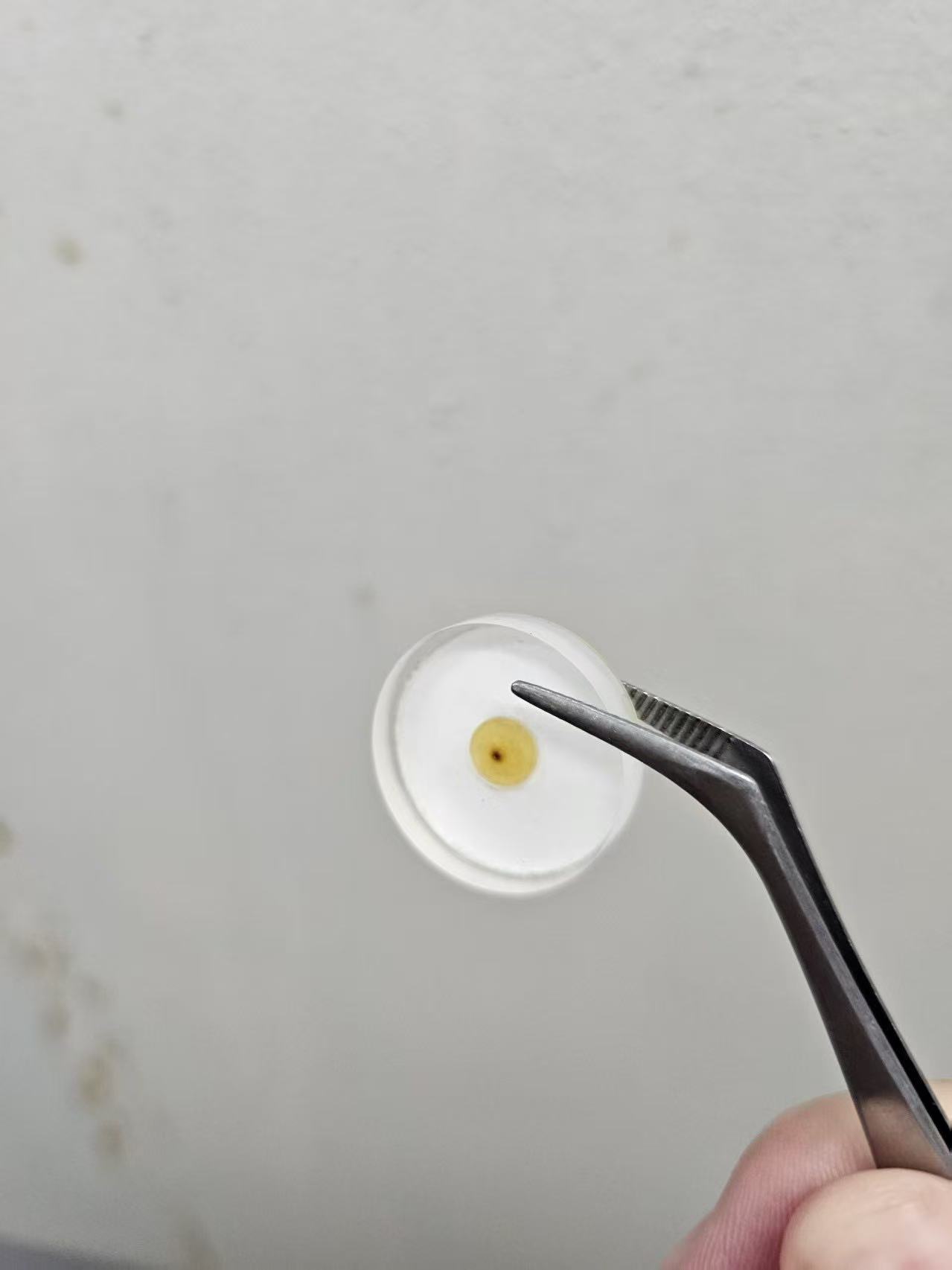
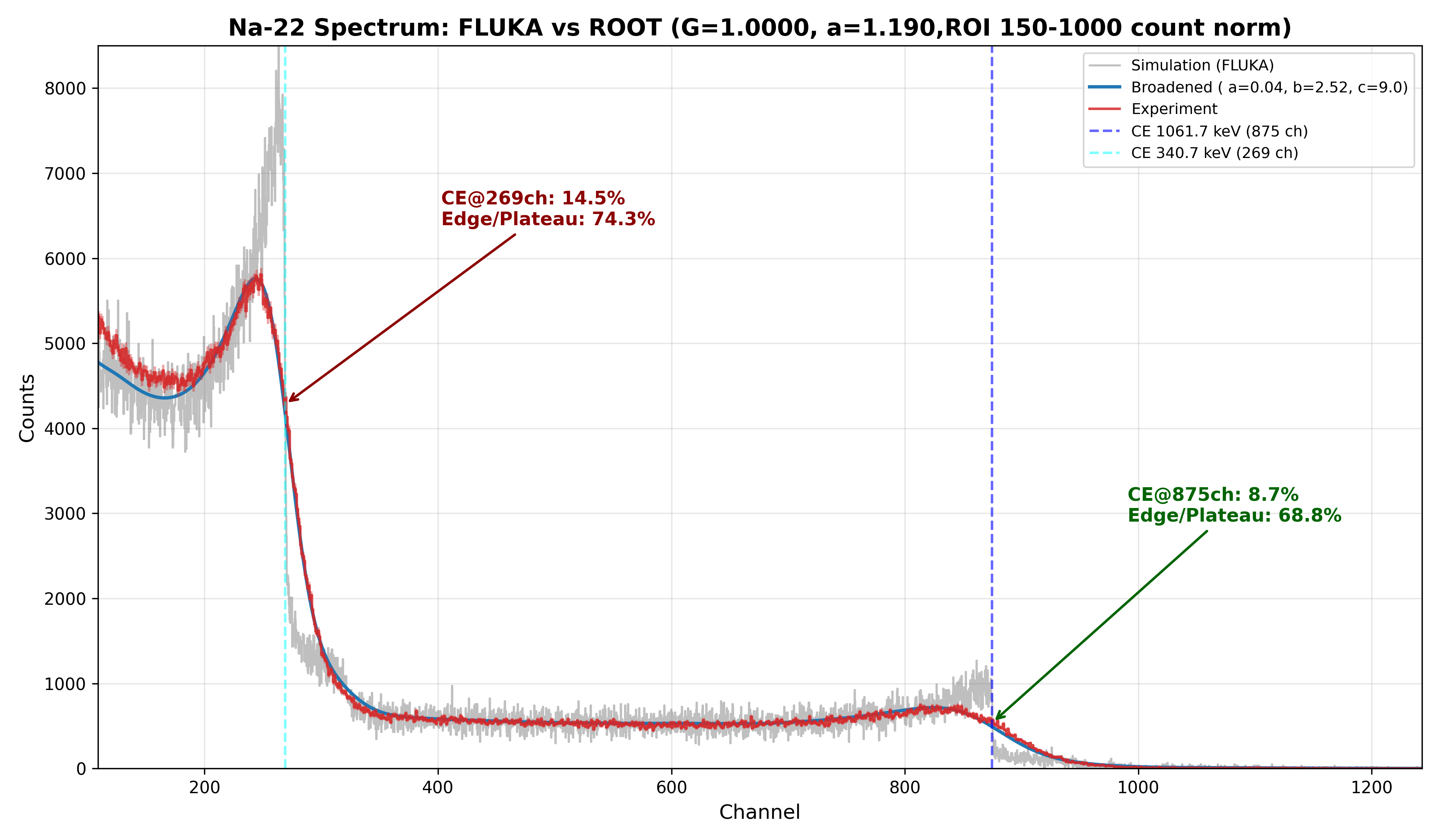
I looked up the packaging information of our experimental Na22 source. It has yellow epoxy inside with an acrylic outer casing. I’ve added this geometry into my simulation, and the new results match the experimental data very well now.
I really appreciate your guidance on this issue.
Best regards ,
Yiteng